Pereira’s dissent from abstract expressionism explored
This essay from the Neuberger Collection explores Pereira’s critique of abstract expressionism, which turned some of the leading critics of her era against her.
November 25, 2022 Comments Off on Pereira’s dissent from abstract expressionism explored
A scholarly look at Pereira’s glass paintings
The D. Wigmore Gallery in Manhattan has just mounted a small, highly focused and penetrating examination of Pereira’s works on glass and later oil paintings that reflect the evolution of her metaphysics.
November 16, 2022 Comments Off on A scholarly look at Pereira’s glass paintings
Women and abstraction
Here you will find a revealing encounter at the Whitney Museum with the role of women in abstraction. The Whitney steadfastly championed Pereira and other women when the New York art scene was notoriously misogynistic. Pereira’s first major retrospective was held at the old Whitney Museum on 8th Street in Greenwich Village in 1953.
November 13, 2022 Comments Off on Women and abstraction
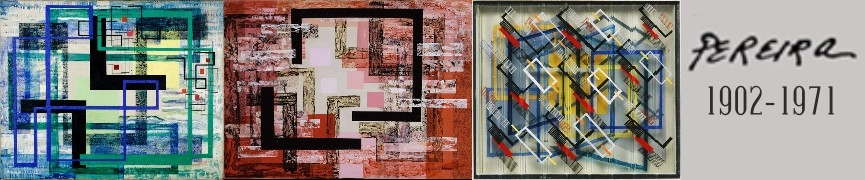
 Welcome to the official website of Irene Rice Pereira (1902-1971). I. Rice Pereira, as she was known, was one of the foremost modernist artists of the 20th Century. Her paintings can be found in museums around the world. The purpose of this website is to direct inquirers to her paintings, publications about her, museums and galleries exhibiting her work, archives and relevant websites. One such site, www.juanitaguccione.com, is devoted to the painting career of her sister. Correspondence and original appreciations of Irene Rice Pereira’s work and life are invited. Images of Pereira works in museums are now on the Gallery page.
June 23, 2015 Comments Off on
Rare youthful Pereira photo
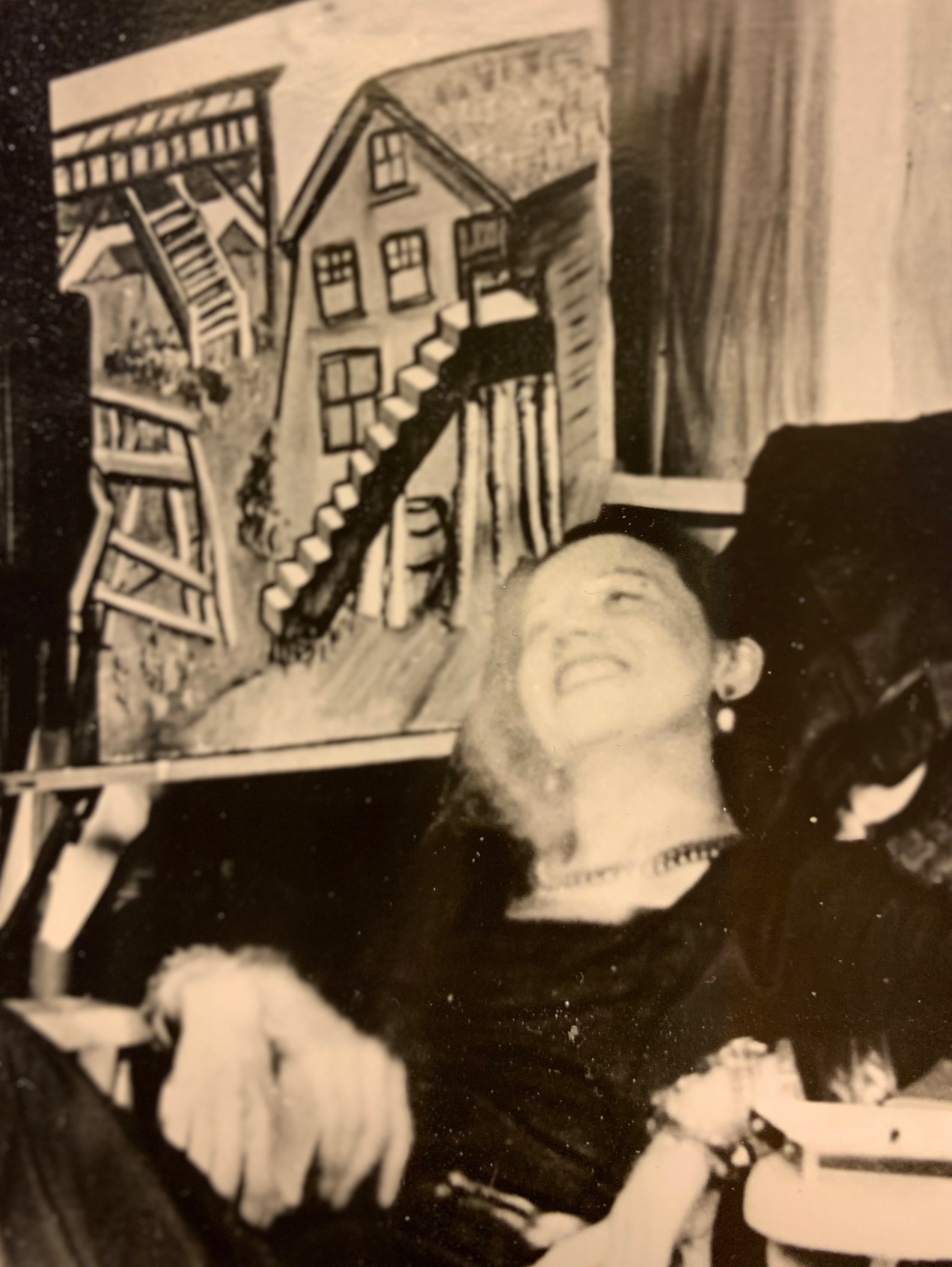
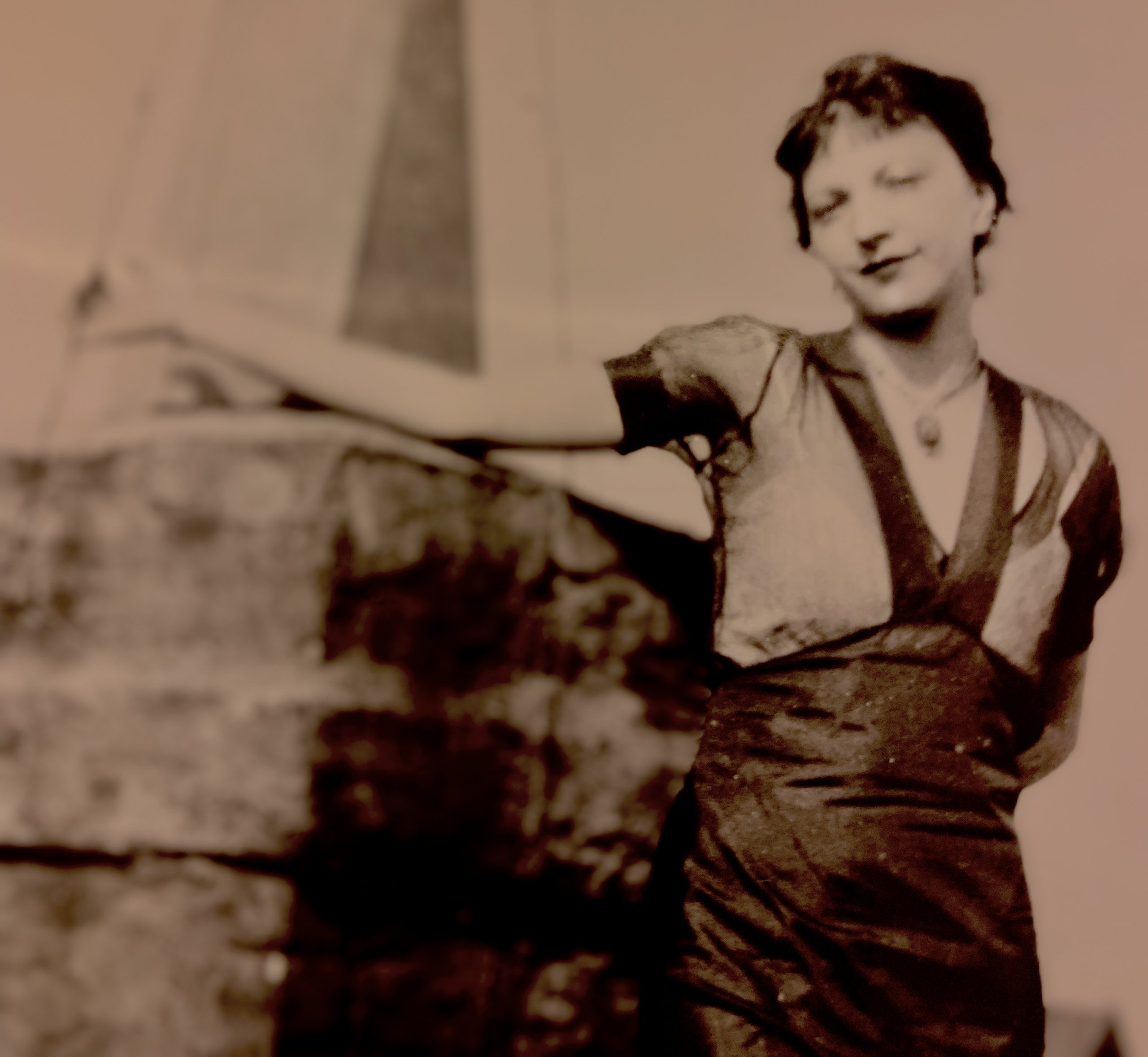
Rare informal photos of Irene Rice Pereira, Provincetown, MA, 1935, and her younger sister, Dorothy, Brooklyn, 1935; Pereira visited North Africa the same year. The painting in the background was made by her that same year. The photo seems to have been tampered with. Her nephew, Djelloul Marbrook, remarks that he has never before seen such a relaxed and joyful image of the artist. He recently discovered these photos in his attic.
February 5, 2023 Comments Off on Rare youthful Pereira photo
Seven Red Squares
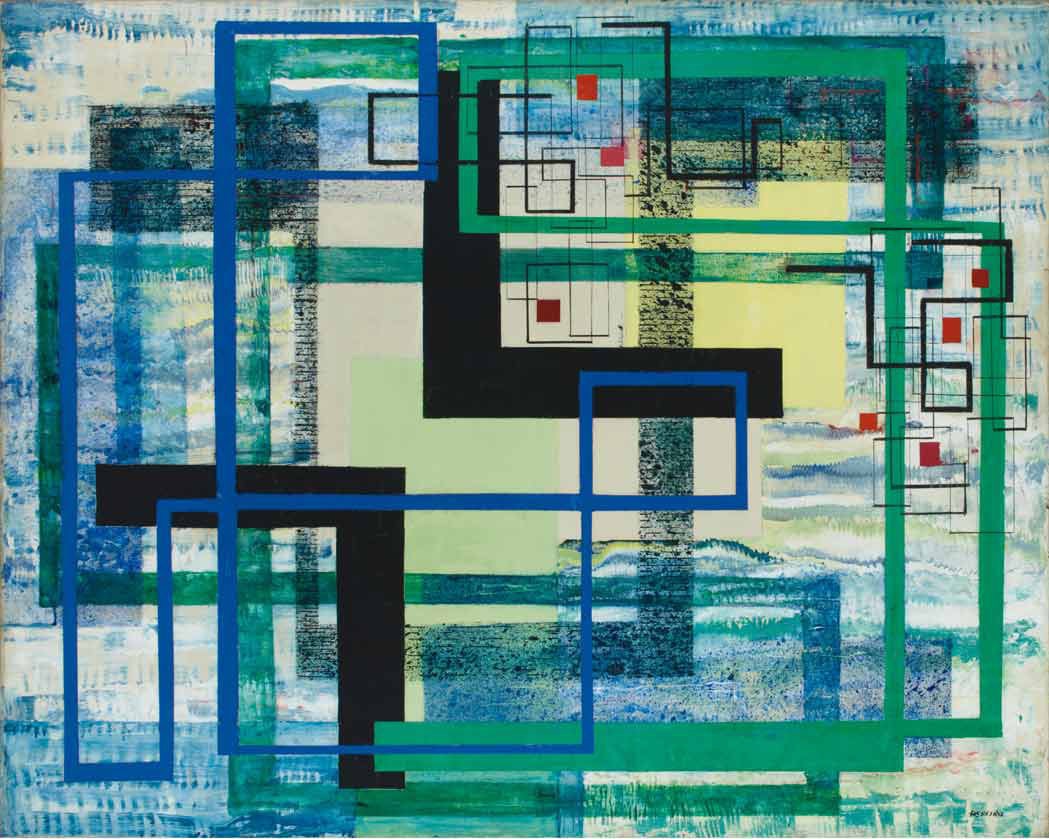
Seven Red Squares, 1951, Oil on Canvas, 40 x 50 inches, Boston Museum of Fine Arts
October 22, 2019 Comments Off on Seven Red Squares
Gallery of Paintings by Irene
Irene Rice Pereira made many renowned paintings in her life. To see a concise display of her paintings and where they are exhibited, click HERE.
May 9, 2019 Comments Off on Gallery of Paintings by Irene
Painting on the Eve of a Breakthrough
By Djelloul Marbrook
This early (1939) geometric abstraction in the collection of the Metropolitan Museum in Manhattan was executed on the eve of her breakthrough to painting on layers of fluted glass. Her second husband, George Wellington Brown, a naval architect, was influential in interesting her in new materials. See other Pereiras at the Metropolitan Museum on the Gallery page.
March 9, 2017 Comments Off on Painting on the Eve of a Breakthrough
“Shooting Stars” at the Met
By Djelloul Marbrook
Irene Rice Pereira’s masterpiece, Shooting Stars, is hanging in the Lila Acheson Wallace Wing of The Metropolitan Museum. In the same gallery are works by Jean Arp, Roberto Matta and Pablo Picasso. The installation of this magnificent oil on glass constitutes a restoration of Pereira to the pantheon and a victory for feminists. See other Pereiras at the Metropolitan Museum on the Gallery page.
March 9, 2017 Comments Off on “Shooting Stars” at the Met
Pereira at The Smithsonian
By Djelloul Marbrook
This Smithsonian article and its links are well worth studying. They address Irene Rice Pereira’s absorption in the Bauhaus and her pioneering development of the influential WPA Design Laboratory. The Smithsonian’s Frost Collection includes a large number of Pereiras from that period. Her artist sister, Juanita Guccione, also worked for the WPA. See other Pereiras at the Smithsonian Museum of American Art on the Gallery page.
March 9, 2017 Comments Off on Pereira at The Smithsonian
Survey of Masterpieces by Guggenheim Artists
A sweeping 2017 survey of non-objective art at Leila Heller Gallery included Irene Rice Pereira’s Seven Red Squares, and rarely seen masterpieces by Hilla Rebay, Rudolf Bauer, Wassily Kandinsky, László Moholy-Nagy, Charles Green Shaw, Rolph Scarlett, Penrod Centurion, Irene Rice Pereira, Raymond Jonson, John Ferren, John Sennhauser, Albert Gleizes, Lloyd Ney, Ilya Bolotowsky, Fernand Léger, Alice Trumbull Mason, and Alice Mattern, with works portraying the rise and development of non-objective painting, spanning from 1912 to 1951. Pereira was one of Rebay’s early protégés.
March 9, 2017 Comments Off on Survey of Masterpieces by Guggenheim Artists